 Cubesite
How a Leading Pharmaceutical Manufacturer Saved $50K in Freight Costs with CubeSite
CubeSite connected contracts, shipment documents and freight invoices to help the company save $50,000 annually on $5 million in freight spend - while automating routine invoice validation.
Partner
Pharmaceutical manufacturer
Industry
Healthcare & life sciences
Footprint
Cold-chain & regulated deliveries
Products
Logistics data platform, freight audit & reconciliation
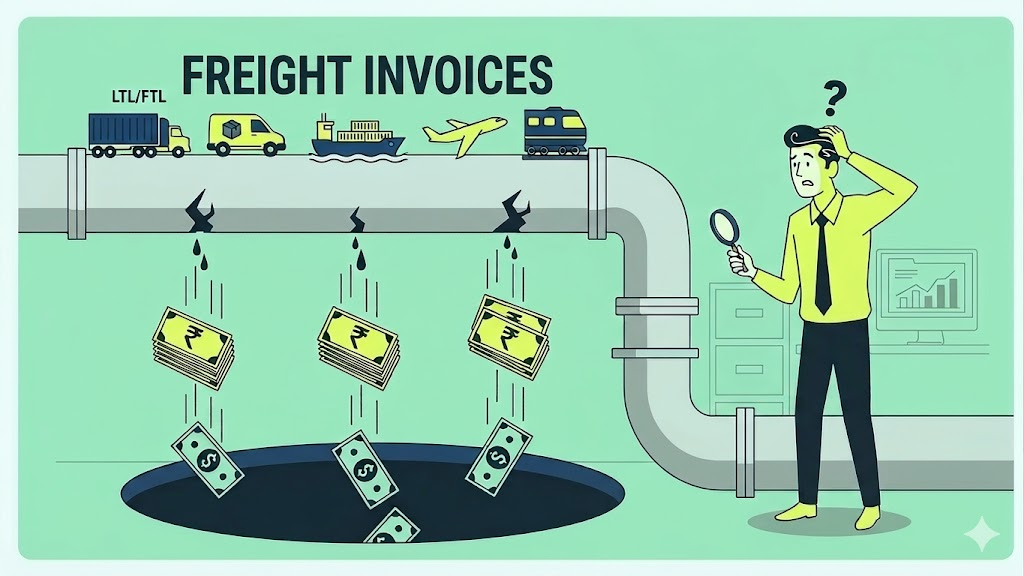
Fragmented logistics data made freight costs difficult to verify.
The pharmaceutical manufacturer managed cold-chain and regulated deliveries across multiple carriers. Contracts, rate cards, shipment records and invoices were spread across systems and inboxes. To validate a charge, finance first had to find the applicable agreement and match it to delivery evidence. Manual checks limited audit coverage and made billing exceptions difficult to resolve.
Every charge triggered a document search
Contracts, rate cards and delivery records lived in separate tools and inboxes. Reviewers had to locate and match the documents before they could verify a charge.
Manual review limited the coverage of the audit
Manual rate and accessorial checks limited the audit to sampled invoices. As volumes grew, finance had more records to reconcile and less capacity to investigate exceptions.
Explaining a payment could take days
Explaining a payment required finding the relevant contract clause and delivery evidence. Without a connected audit trail, assembling that record could take days.
The solution
One logistics data platform. A clear basis for every charge.
CubeSite unified contracts, rate cards, shipment documents and freight invoices into a shipment-level audit trail. Logistics, procurement and finance could validate charges, investigate exceptions and pursue corrections from the same connected record. The engagement focused on freight audit and reconciliation within CubeSite’s broader logistics data platform.
Step 1
Build the freight record behind the invoice
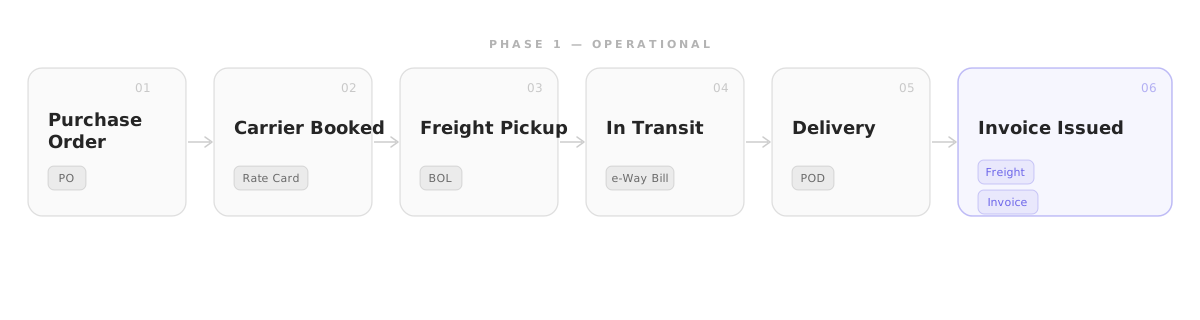
CubeSite matched contracts, rate cards, proof-of-delivery documents, air waybills and invoices to each shipment. Reviewers could trace a billed charge to the agreed terms and delivery evidence in one place.
Step 2
Check invoice lines against the agreement
Invoice lines were checked against contracted rates and accessorial terms. Out-of-contract charges and missing supporting documents were flagged for review, allowing the team to focus on exceptions.
Step 3
Bring the evidence into the dispute
Each variance appeared with the relevant contract clause and shipment documents. The team could verify the discrepancy, prepare a carrier dispute and track the correction through settlement.
One record behind every charge
Commercial terms
Contracts and applicable rate cards
Agreed charges
Shipment evidence
PODs and air waybills
Service record
Freight invoices
Charges and supporting documents
Validation basis
From invoice to evidence-backed review
Illustrative workflowInvoice linked to shipment
Contract, rate card and shipment documents form one record
Charges compared with agreed terms
Rates and accessorial terms provide the validation basis
Variance routed for review
Missing evidence and out-of-contract charges are flagged
Dispute prepared with evidence
Relevant POD, air waybill and contract clause support the review
Settlement status recorded
An identified variance is kept separate from a realised saving
The results
$50K in annual savings. 92% automated invoice validation.
The company saved $50,000 annually against $5 million in freight spend, equivalent to a 1% reduction. Across 2,500 audited invoices, 92% were validated without manual review. Exceptions were supported by shipment evidence and organised by carrier, lane and reason.
Financial outcome
$50K saved annually on freight spend.
Annual freight savings of $50,000 represented 1% of the company’s $5 million freight spend. Matching billed charges to agreed terms and shipment evidence supported a repeatable process for controlling freight costs.
Invoice level
92% of audited invoices validated without manual review.
Across 2,500 audited invoices, 92% were validated without manual review. Exceptions were routed to the team with supporting evidence, concentrating manual effort on charges that needed investigation.
Contract level
Billing outside agreed terms became visible.
Rate discrepancies and out-of-contract charges were flagged with the applicable terms and shipment evidence. Procurement could discuss a specific, documented variance with the carrier and pursue a correction.
Carrier and network level
Savings work could be prioritised by carrier, lane and reason.
Exceptions were grouped by carrier, lane and reason to help prioritise recovery work and identify recurring billing patterns. Identified variances, submitted disputes and collected credits were tracked separately.
Beyond the savings, CubeSite gave logistics, procurement and finance a repeatable way to audit and reconcile freight costs. Each charge could be traced to its agreement and shipment evidence, helping teams resolve exceptions and identify recurring billing patterns.
Stronger freight cost control, built on connected logistics data.
Find the cost leakages in your freight spend.
See how CubeSite connects your logistics data, validates freight charges and turns billing exceptions into actionable recovery opportunities. Book a 30-minute walkthrough tailored to your operations.